
I still remember the look on my oldest’s face when he realized that the shiny new LEGO set he’d been begging for didn’t just “appear” on the shelf—it required weeks of skipped candy bars and careful counting. It was a tough lesson, but a necessary one. Somewhere along the way, the internet started telling us that teaching finances requires expensive apps, complex compound interest charts, or a college-level understanding of the stock market. Honestly? That’s just nonsense. If you want to learn how to teach kids about money, you don’t need a fancy software subscription; you just need a few clear rules and a little bit of patience.
I’m not here to give you any high-priced theories that don’t work when the grocery bill is climbing. Instead, I want to share the real-world tactics I used to raise two kids on a single income in the Midwest. We’re going to talk about using clear jars instead of digital accounts, making the grocery store a classroom, and turning small mistakes into big lessons. My goal is to give you a simple, honest roadmap so your children grow up feeling capable, not overwhelmed, when they finally hold their own paycheck.
Table of Contents
Age Appropriate Money Lessons for Every Stage
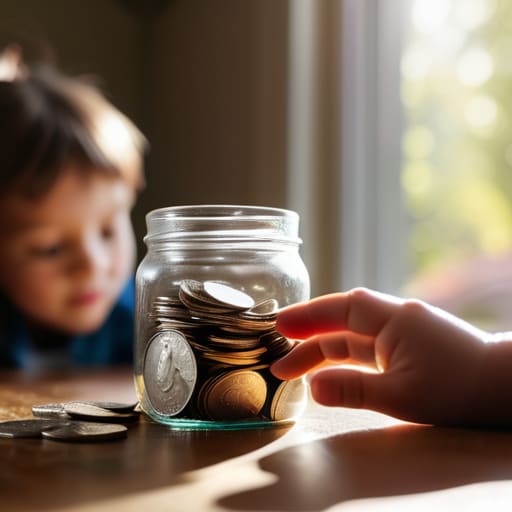
When it comes to age-appropriate money lessons, you can’t really use a one-size-fits-all approach. For the little ones—we’re talking toddlers and preschoolers—it’s all about the basics of teaching children the value of money through sight and touch. I used to let my kids help me count out quarters for the laundry machine; it wasn’t about the math, it was about seeing that coins are real things you trade for things you need. At this age, even a simple clear jar works wonders because they can actually see the pile growing.
As they hit those elementary school years, that’s when you start using allowance to teach finance in a more hands-on way. Instead of just handing them a five-dollar bill for chores, give them a choice: they can spend it on a candy bar today, or put it in their “big goal” jar for a Lego set next month. This is the sweet spot for teaching kids about saving and spending by letting them make small, low-stakes mistakes now, so they don’t make expensive ones later.
Financial Education for Toddlers and Little Learners

Now, I know what you’re thinking—toddlers? They can barely tie their shoes, let alone balance a checkbook. But honestly, even at three or four years old, they are starting to notice that we swap colorful slips of paper or plastic cards for things they actually want, like a box of crackers or a new toy. This is where financial education for toddlers actually begins. It isn’t about math equations; it’s about the concept of choice. When we’re at the grocery store, I’ll let my youngest hold a single apple and ask, “Do we want this one or that one?” It’s a tiny step, but it starts the process of understanding that resources aren’t infinite.
As they get a little older, maybe around five or six, you can start teaching children the value of money through something tangible. I’ve always found that a clear glass jar works wonders. Unlike a ceramic piggy bank where the coins just disappear into a dark hole, a glass jar lets them see their progress. Every time they drop a quarter in, they can watch that little pile grow. It makes the abstract idea of “later” feel much more real.
Five Ways to Make Money Real for Them
- Get them using clear jars instead of a piggy bank. There’s something about seeing those quarters and singles physically pile up against the glass that makes the concept of “saving” click much faster than a digital number on a screen ever could.
- Turn the grocery store into a living classroom. I used to bring my kids along and give them a small budget for a specific item—like apples or a box of crackers—and let them hunt for the best price. It teaches them that every cent counts toward the total.
- Let them make small, controlled mistakes. If they blow their entire allowance on a plastic toy that breaks by Tuesday, don’t rush to replace it. It’s much better for them to learn that lesson with five dollars now than with five hundred dollars when they’re twenty.
- Talk openly about the “why” behind your spending. You don’t need to stress them out with the mortgage details, but saying things like, “We’re skipping this extra takeout night so we can save up for our summer camping trip,” helps them see that money is a tool for making choices.
- Introduce the idea of “Giving” as its own category. I always suggest having a small jar specifically for donations or buying a gift for a friend. It helps kids understand that money isn’t just for getting things for ourselves, but for helping our community, too.
Lessons to Carry Home
Start with what they can see; whether it’s a clear jar for coins or a simple chore chart, kids need to see the direct connection between effort and the reward.
Make it a conversation, not a lecture; talk about the price of milk or why we’re choosing the store brand while you’re out shopping so money feels like a normal part of life, not a scary secret.
Let them make mistakes now while the stakes are low; it’s much better for them to learn the sting of a spent allowance on a toy they’ll regret tomorrow than to learn it with a credit card when they’re twenty.
## The Real Goal
“We aren’t trying to turn our kids into little accountants; we’re just trying to give them the confidence to know that a dollar spent today is a choice they’re making, and that even the smallest bit of saving can build something steady over time.”
Marion Kessler
Small Steps Toward Big Confidence

At the end of the day, teaching kids about money isn’t about turning them into little accountants or memorizing complex math formulas. It’s about those tiny, everyday moments—showing them how we choose the store brand to save a few cents, or letting them hold the coins while we count out the change at the checkout. We’ve talked about starting with simple jars for the toddlers, moving into real-world chores for the school-aged kids, and eventually letting the teenagers handle a bit of their own responsibility. The goal is to build a foundation of understanding and patience through consistent, small habits that make the big concepts feel much less intimidating as they grow up.
I know it can feel overwhelming, especially when you’re already juggling a million other things in your own budget. There’s no perfect manual for this, and you’re going to make mistakes along the way—I certainly did. But please remember that you don’t have to be a financial expert to be a great teacher. Just by being honest about how we manage our household, you are giving them a gift that lasts a lifetime. You are teaching them that money is a tool to build a stable life, and that confidence comes from practice, not perfection. Just keep showing up, keep talking, and keep it simple.
Frequently Asked Questions
What do I do if my child wants to spend all their money on something silly instead of saving?
I’ve been there—watching my oldest eye a plastic toy that’ll be broken by Tuesday. Don’t swoop in and stop them; that just teaches them to hide their spending from you. Instead, let them make the “mistake.” If they blow their whole allowance on a silly gadget, they’ll feel that empty pocketbook next week. That’s when you step in, not with a lecture, but with a gentle, “Tough break, honey. What’s the plan for next time?”
Should I be giving my kids actual cash for their allowance, or is there a better way to track it?
I’m a big believer in using actual cash for the little ones. There’s something about the weight of a dollar bill or the clink of a coin that makes the concept of “value” real in a way a screen just can’t. If they can’t touch it, it’s just pretend. Once they hit those pre-teen years, though, that’s when we can start talking about simple apps or a dedicated debit card to track things.
How do I talk to my kids about our family's budget without making them feel anxious about money?
The trick is to talk about “choices” rather than “lack.” Instead of saying, “We can’t afford that,” I try saying, “That’s not in our plan for this month, but we can save for it later.” Frame it as a way of prioritizing what matters to the family—like a weekend trip or a new game—rather than a scary deficit. When they see money as a tool for making decisions, they feel empowered, not worried.