
I remember sitting at my kitchen table last Tuesday, staring at a stack of overdue bills and a half-finished budget spreadsheet, while the laundry hummed loudly in the background. I knew exactly what I needed to do, but instead, I spent forty-five minutes scrolling through recipes I’d never actually cook. We’ve all been there, caught in that heavy, restless loop where you’re busy doing everything except the one thing that actually matters. Most productivity experts will try to sell you some expensive, color-coded digital planner or a complex “system” to fix your life, but let’s be honest: when you’re tired and overwhelmed, you don’t need a new app, you need to figure out how to stop procrastinating without losing your mind in the process.
I’m not here to give you any of that high-priced, polished nonsense. I want to share the small, gritty habits that actually worked for me when I was raising kids on a single income and trying to keep my head above water. I’m going to walk you through some straightforward, common-sense shifts that help you clear the mental clutter and just get moving. No fancy tools required—just a few practical ways to reclaim your time and your peace of mind.
Table of Contents
- Breaking Down Large Tasks Into Manageable Bites
- Simple Time Management Techniques for a Calmer Day
- Five Little Ways to Get Moving When You’re Feeling Stuck
- My Three Golden Rules for Beating Procrastination
- A Little Less Thinking, A Little More Doing
- A Little Grace and a Lot of Progress
- Frequently Asked Questions
Breaking Down Large Tasks Into Manageable Bites

Whenever I look at a massive project—like cleaning out the entire garage or finally tackling my taxes—I can practically feel my brain shutting down. It’s what some folks call overcoming task paralysis, but to me, it just feels like being stuck in the mud. The problem is that we tend to look at the mountain instead of the trail right in front of us. When a task feels too big, your brain treats it like a threat, and suddenly, you’re scrolling through your phone for an hour just to escape the stress.
The trick I learned the hard way is to stop writing “Clean the Kitchen” on my to-do list. That’s not a task; that’s a whole production. Instead, I write down something so small it feels almost silly, like “empty the dishwasher” or “wipe down the counters.” By breaking down large tasks into these tiny, bite-sized pieces, you take the intimidation factor out of the equation. You aren’t climbing a mountain anymore; you’re just taking one single step, and once you get that first little win under your belt, the rest usually starts to follow.
Simple Time Management Techniques for a Calmer Day
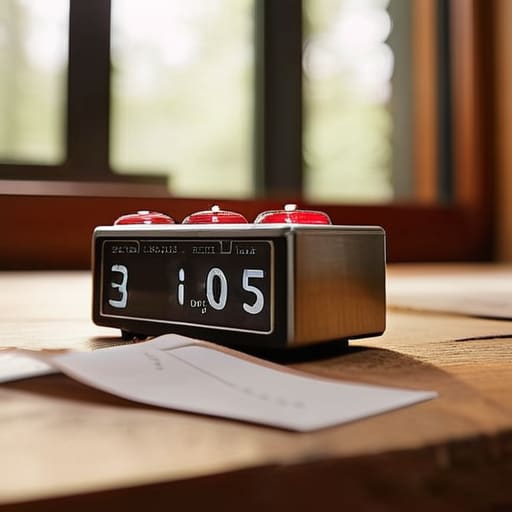
Now, I’m not one for those fancy, high-tech scheduling apps that promise to change your life but end up just being one more thing to manage. To be honest, most of those “productivity hacks for focus” feel like they were designed for people who don’t have a sink full of dishes or a boss breathing down their necks. For me, it’s all about the basics. I’ve found that using a simple timer—even just the one on my stove—can be a lifesaver. I call it the “ten-minute dash.” I tell myself I only have to work on a dreaded task for ten minutes, and usually, once the momentum starts, the dread fades away.
If you find yourself staring at a to-do list feeling completely frozen, you might be experiencing what some call overcoming task paralysis. It’s that heavy, stuck feeling where you know what needs doing, but your brain just won’t pull the lever. When that happens, stop trying to “manage your time” and start managing your energy instead. Pick the one thing that feels the least heavy and do that first. It isn’t about being a machine; it’s about making your day feel a little less like a mountain and a little more like a series of small, walkable steps.
Five Little Ways to Get Moving When You’re Feeling Stuck
- Forgive yourself for the slow start. I used to spend more time beating myself up for wasting the morning than actually doing the work, and that just makes you want to hide under the covers even more. If you’ve wasted two hours, fine—let it go and start fresh right now.
- Clear the visual clutter before you sit down. It’s hard to focus on a big project when there’s a stack of mail and a half-empty coffee mug staring you in the face. Take two minutes to sweep the junk aside so your brain isn’t fighting a messy desk while you’re trying to think.
- Use the “Five-Minute Rule.” Tell yourself you aren’t going to do the whole job; you’re just going to do five minutes of it. Usually, once I’ve actually opened the file or picked up the broom, the hardest part—the starting—is already over.
- Put your phone in another room. We all know it’s a trap. That little device is designed to pull you away the second a task gets even slightly boring. If you can’t see it, you’re much less likely to reach for it when things get tough.
- Write down your “Must-Dos” the night before. There is nothing worse than sitting down at your desk and having no idea where to begin. If I decide on my three most important tasks before I go to bed, I can hit the ground running instead of spinning my wheels.
My Three Golden Rules for Beating Procrastination
Don’t wait for the “perfect” time to start; just clear your desk, set a timer for ten minutes, and tackle that one nagging task you’ve been avoiding all morning.
Stop looking at your whole to-do list at once—it’s overwhelming and it’ll paralyze you—and instead, just focus on the one small, manageable piece right in front of you.
Give yourself a little grace when you slip up, because beating yourself up only wastes more time; just take a breath, reset, and get back to work.
A Little Less Thinking, A Little More Doing
“We often wait for a burst of motivation that never actually shows up; the truth is, you don’t need to feel inspired to start, you just need to pick up one small piece of the puzzle and get your hands moving.”
Marion Kessler
A Little Grace and a Lot of Progress
At the end of the day, beating procrastination isn’t about becoming some kind of productivity machine or following a rigid, complicated system. It’s really just about those small, intentional shifts we talked about: breaking that mountain of work into tiny, pebble-sized tasks and using simple tools to keep your day from feeling like a runaway train. I’ve learned through plenty of messy afternoons that if you try to do everything at once, you’ll end up doing nothing at all. The goal isn’t perfection; it’s just about getting started and finding a rhythm that actually works for your real, busy life.
Please, be kind to yourself if you have a bad day and find yourself staring at a screen or a pile of laundry instead of tackling it. We all have those moments where the weight of everything feels a bit too heavy. But remember, you don’t have to fix your entire life by tomorrow morning. Just pick one small thing—one single task from your list—and give it ten minutes of your time right now. You’ll be surprised at how much peace of mind comes from simply making a little bit of headway. You’ve got this, one small step at a time.
Frequently Asked Questions
What do I do when I feel so overwhelmed by a task that I just end up staring at my phone instead?
I call that “the paralysis of the pile.” When you’re staring at your phone, it’s usually because your brain is trying to protect you from something that feels too big or too scary. My trick? Put the phone in another room—literally, go tuck it under a pillow in the bedroom. Then, tell yourself you’re only going to work for five minutes. Just five. Usually, once the phone is gone and the timer is running, the dread starts to fade.
How can I stay on track when my house or workspace is a complete mess and keeps distracting me?
Look, I’ve been there. It’s hard to focus on a budget or a work project when there’s a mountain of laundry staring you down. When the mess feels overwhelming, don’t try to clean the whole house. Just clear your immediate “work zone”—that one square foot of desk space or the kitchen table. If you can’t see the clutter, your brain can finally stop processing it. Small, visible wins keep you moving.
Is it okay to take breaks, or will that just turn into more procrastination?
That is such a good question, and honestly, I used to worry about the exact same thing. I thought if I sat down for a cup of tea, I’d never get back to my chores. But here’s what I’ve learned: a break isn’t the same as avoiding work; it’s how you refuel so you don’t burn out by noon. The trick is to keep them intentional. Set a timer for ten minutes, step away from the screen, and when it dings, you get right back to it.