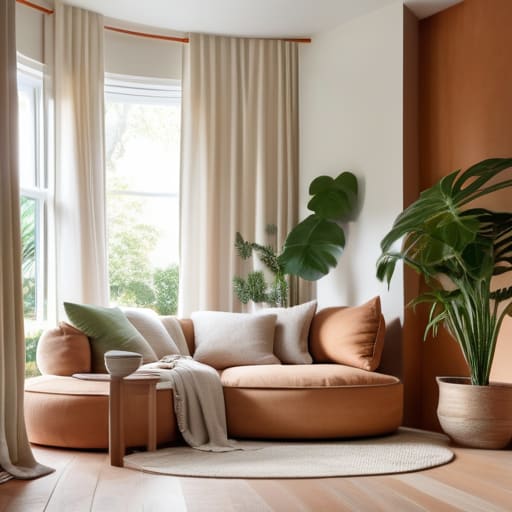
I remember standing in the middle of my first apartment, staring at a living room so tiny I felt like I could touch both walls without even stretching, and thinking, there has to be a better way. I used to see those glossy interior design magazines telling you that you needed to gut your house or spend thousands on “minimalist” designer furniture just to find some breathing room. Honestly, that’s just nonsense. You don’t need a massive renovation or a huge bank account to figure out how to make a small room look bigger; you just need to stop fighting the space you actually have and start working with it.
I’m not here to sell you on expensive, trendy gimmicks that will look dated by next season. Instead, I want to share the practical, common-sense tricks I’ve picked up over the years—the kind of stuff that actually works when you’re working with a tight budget and limited square footage. We’re going to talk about clever lighting, smart furniture placement, and how to clear the visual clutter that makes a room feel suffocating. My goal is to help you create a home that feels open and inviting, no matter how many square feet you’re actually working with.
Table of Contents
Smart Interior Design Color Palettes for Small Rooms
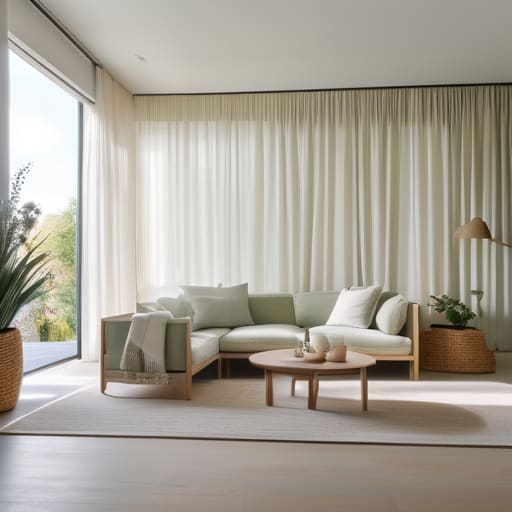
Now, when it comes to picking colors, I used to think I needed bold, dark shades to give a room “character.” But after years of living in tight quarters, I’ve learned that the wrong colors can make a cozy room feel like a cramped closet. When you’re looking at interior design color palettes for small rooms, my best advice is to lean into light, airy tones. Think soft whites, pale greys, or even a very light sage green. These shades act like a sponge for light, reflecting it around the room rather than absorbing it, which helps the walls feel like they’re pushing outward just a little bit.
If you really want to add some depth without making the walls close in, try a monochromatic approach. Instead of jumping between high-contrast colors, pick different shades of the same neutral hue. It creates a seamless look that’s easy on the eyes and keeps the visual clutter to a minimum. I always tell my neighbors that consistency is your best friend when you’re working with limited square footage. By keeping the color story simple, you create a sense of flow that makes the whole space feel much more intentional and open.
Using Mirrors to Expand Visual Space Effortlessly
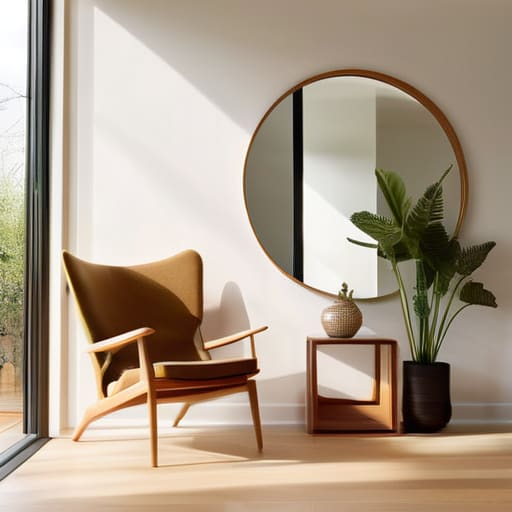
Now, if you’re looking for one of the easiest ways to trick your eyes into seeing more room, you can’t beat a good mirror. I’ve always found that using mirrors to expand visual space is a bit like opening a window that isn’t there. I remember when I first moved into my tiny starter apartment; the living room felt so claustrophobic until I hung a large, leaning floor mirror against the main wall. Suddenly, the room felt like it had a second dimension.
The real trick is all about where you place them to catch the light. If you position a mirror directly across from a window, it’ll bounce that natural sunlight deep into the corners of the room, making everything feel much airier. It’s one of those simple lighting techniques for small spaces that doesn’t cost a fortune but makes a massive difference. You don’t need a dozen tiny mirrors scattered around, though—that just creates visual clutter. Just pick one or two well-placed pieces to do the heavy lifting, and you’ll feel that sense of openness immediately.
Five Simple Tricks to Help Your Room Breathe
- Clear the floor as much as you can. When you can see more of the floorboards, the whole room feels less crowded. Try to pick out furniture with legs rather than pieces that sit heavy and flat on the ground; seeing that little bit of space underneath makes a world of difference.
- Don’t be afraid to use your walls. If you’re short on floor space, go vertical. I always say, if it doesn’t need to sit on a table, hang it on a shelf. Floating shelves are a lifesaver for keeping clutter off your surfaces while still giving you a place for your favorite books or plants.
- Choose multi-purpose pieces that work double duty. I learned this the hard way with my kids—you don’t need a separate desk, a coffee table, and a side table if you can find one sturdy piece that does it all. Look for ottomans with storage inside or a dining table that can double as a workspace.
- Keep your window treatments high and light. Instead of hanging your curtain rod right at the top of the window frame, mount it a few inches higher and wider. It tricks the eye into thinking the window is much larger than it actually is, and using lighter fabrics lets that natural sunlight pour in.
- Watch out for “visual noise.” Too many small knick-knacks and tiny decorations can make a room feel frantic and tiny. I prefer to pick a few larger, meaningful pieces to display rather than dozens of little things. It’s much easier on the eyes and makes the space feel intentional rather than cluttered.
A Quick Cheat Sheet for Your Small Space
When you’re picking out paint or fabrics, stick to lighter, more consistent colors to keep the walls from feeling like they’re closing in on you.
Don’t underestimate the power of a good mirror; placing one across from a window is one of the easiest ways to trick your eyes into seeing more depth.
Focus on keeping your floor space as clear as possible—the more of the actual floor you can see, the less cramped the whole room will feel.
## A Little Room for Breathing Room
“You don’t need a massive floor plan to feel like you’ve got space to breathe; sometimes, all it takes is clearing the visual clutter and letting the light do the heavy lifting so your home feels like a sanctuary instead of a storage unit.”
Marion Kessler
Making It Work for You
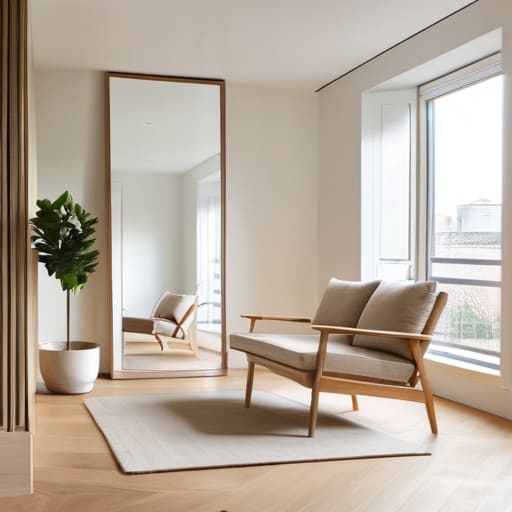
At the end of the day, making a small room feel bigger isn’t about buying expensive, designer furniture or hiring a professional decorator. It really comes down to the little things we talked about—choosing a light, airy color palette that lets the walls breathe, and being strategic with where we place mirrors to bounce that natural light around. Whether you’re clearing out the clutter from a corner or rearranging your layout to open up the floor, every small change helps reduce that “cramped” feeling. Remember, it’s not about how much square footage you have, but how you choose to use the space you’ve got.
I know that looking at a cluttered or tight room can sometimes feel a bit overwhelming, especially when you’re already juggling a million other things in your life. But please don’t feel like you have to do everything at once. Start with one corner, or just one wall, and see how it feels. You’ll find that as your home starts to feel a little more open and organized, your mind might feel a little calmer, too. A home should be a place where you can actually rest and recharge, not a place that makes you feel boxed in. You’ve got this, and small steps truly do lead to big changes.
Frequently Asked Questions
What can I do if my room is small but also really dark and lacks natural light?
That’s a tough one, because a dark room can feel heavy pretty quickly. When I’m dealing with a space that has no natural light, I stop fighting the shadows and start working with them. First, swap out any heavy, dark curtains for light, sheer ones—even if there’s no view, you want every bit of light to bounce. Then, layer your lighting. Don’t just rely on one overhead bulb; use small lamps in corners to pull the darkness out of the edges.
Are there specific types of furniture that help open up a space without making it feel empty?
When you’re working with a tight footprint, look for furniture with “legs.” If you can see the floor extending underneath a sofa or a sideboard, the room feels much airier. I’m also a big fan of multi-purpose pieces—think an ottoman that doubles as a coffee table or a dining bench that tucks completely under the table. It keeps the walkways clear and prevents that “cluttered” feeling we all dread.
How do I handle a lot of "stuff" or clutter when I don't have much storage space to hide it in?
Look, I’ve been there—standing in a room feeling like the walls are closing in because there’s just too much stuff. When you’re short on cabinets, you have to stop thinking about “hiding” things and start thinking about “verticality.” Use those empty wall spaces! I swear by tall, narrow bookshelves or even sturdy floating shelves. If it’s on the floor, it makes a room feel tiny; if it’s up on the walls, the room breathes again.